How Corporate Housing Works: A Step-by-Step Guide

Start With the Right Housing Details
Share your dates, location, group size, bed requirements, parking needs, and budget with StayNarami to begin a more accurate property search.
Arranging temporary housing may sound simple. Find a property, confirm the dates, and hand over the keys. But understanding how does corporate housing work in practice reveals a different picture — the process gets harder when an employee’s start date shifts, a project suddenly needs more workers, parking is limited, or the monthly bill arrives with charges no one expected.
For a longer assignment, hotels aren’t necessarily the best solution. The average U.S. hotel room rate jumped to $168.51 per night in May 2026 while national occupancy increased to 65.7%, CoStar’s U.S. hotel performance report revealed.
One month would cost around $5,055 per night (if it were an average cost, plus the taxes, parking, meals, laundromat, and everything else that would add up). Prices may be notably higher at busy work seasons or big events in the area.
Corporate housing is another choice that’s available to companies and renters. Industry association: It is “fully furnished, temporary residential housing. These can be furnished apartments, condominiums, or homes with furniture, kitchen utensils, and utilities paid along with an internet connection already set up. The majority of the stays are for 30 days or more.
TL;DR (Too Long; Didn’t Read)
- Corporate housing follows a simple procedure: outlining the stay, providing housing requirements, comparing appropriate units, confirming the complete cost, signing the contract, transferring into the unit, and handling extensions and moving out.
- The more seamless a request, the smoother the house-matching. Before the search, companies should check if days will be different, how many people will be staying, if there are separate beds needed, and if there will be any restrictions on commute, parking arrangements, pets, accessibility, billing policy, and total monthly cost.
- A good corporate housing provider should take care of property sourcing and how it’s furnished, utilities, move-in assistance, maintenance, extensions, and billing, all under a single roof.
- This guide explains how corporate housing works, from the first housing request to the final invoice. This is written for HR departments, relocation managers, project managers, insurance providers, traveling employees, and the first-time furniture booker.
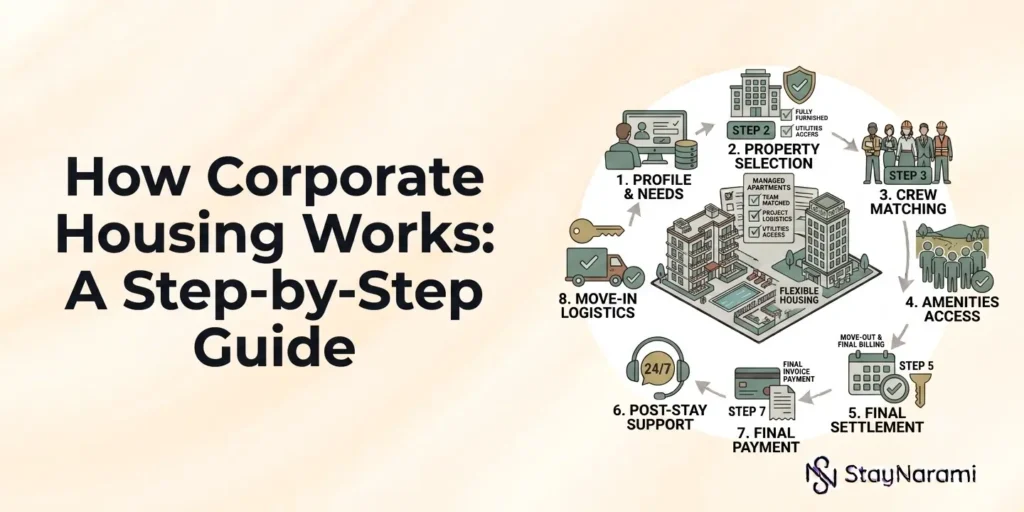
The Corporate Housing Process at a Glance
See below for a quick overview of the corporate housing process.
Define the need → Search for properties → Compare quotes → Approve the home → Sign the agreement → Move in → Receive support → Extend or move out.
It happens like the apartment renting procedure, except that it happens quicker and offers a lot of support services. The house already has the furniture, and utilities are often consolidated into a single bill.
Step 1: Identify Your Housing Need
The first step to a successful booking is to provide clear information. List the individuals who require housing, the length of time the assignment might be required, and the location of housing that will be needed before searching for housing.
Requests, for example, “I need a house in or close to the work site will be met with a house that may not be sufficient; proper job specifications will be the criteria that determine the type of house required. An extensive request will allow the housing provider to begin searching for the most appropriate territory, size, and price range of the location.
1. Determine the Length of Stay and Location
Start with the anticipated dates for moving in and out. If there is no end date, state the earliest possible departure date and describe the reason why this might need an extension.
You then specify the area you want to search for. Don’t make a choice just because of the miles. Although a home might be very close on the map, it can take a long drive due to traffic, tolls, bridges, construction of the road, or limited access to the worksite.
To prepare the housing request, please use the table below:
Information to Gather |
What to Confirm |
| Crew size | How many workers need housing? |
| Beds and rooms | Does each worker need a separate bed? Can any workers share a room? |
| Stay dates | When will the crew arrive, and how long is the stay expected to last? |
| Job-site location | What is the exact address or ZIP code of the work site? |
| Commute | How far can workers reasonably travel to and from the site each day? |
| Vehicles and parking | How many cars, vans, pickups, trailers, or work vehicles need parking? |
| Property preference | Would an apartment work, or does the crew need a house? |
| Pets | Will any workers bring pets? |
| Accessibility | Does anyone need a ground-floor unit, elevator, step-free access, or an accessible bathroom? |
| Budget | What is the total monthly budget, including utilities and other fees? |
| Payment | Will the company pay directly, or will workers be reimbursed? |
When evaluating workforce housing, look at the number of beds, not bedrooms. Four bedrooms isn’t necessarily four beds. One bedroom could have a king bed for a couple, and the other may have bunk beds. Find out how many beds and what size they were there before approving the property.
Step 2: Locate a Corporate Housing Provider
Once the need is established, determining a person to search for and oversee the housing becomes the next step.
There are two popular methods for booking corporate housing:
- Have a property owner or manager list the unit or apartment, which includes furnishings.
- Work with a corporate housing provider or housing coordinator.
Either way can be effective, but there is a varying degree of effort and support.
1. Working With a Broker or Provider vs. Booking Direct
Booking Method |
Main Benefits |
Possible Challenges |
| Booking directly | Direct communication, possible access to a specific property, fewer parties involved | You may need to verify the property, arrange utilities, manage separate payments, and solve problems yourself |
| Housing provider or coordinator | One point of contact, wider property search, centralized billing, move-in help, and ongoing support | Service or administrative fees may apply |
| Online rental marketplace | Large number of visible listings and quick comparisons | Listing details, support levels, lease terms, and property standards may differ |
If you can make a direct booking and know the area where you need the one property, you may find it suitable. A housing provider might prove more helpful if the firm requires multiple homes, project dates vary, or the firm needs to locate workers in a market that is in demand or far away.
Unless one takes time to understand how the property is inspected, there are significant pieces he or she might not realize. Confirm with the person who is renting this that they have authority to rent, and request that they give current photos as well as the mailing address, costs, and exact payment instructions.
Don’t send money unless you can verify it using text messages, posts, or pictures.
Step 3: Review Availability and Pricing
Once the housing request is submitted, the provider searches for matching properties. Depending on the market, you may receive one option or several choices.
Each option should include enough information to make a fair comparison:
- Property address or general location
- Distance and expected drive time to the worksite
- Number of bedrooms, bathrooms, and separate beds
- Monthly rent
- Utility allowance or utility limits
- Internet availability
- Parking details
- Pet rules
- Deposit requirements
- Cleaning or administrative fees
- Cancellation and extension terms
- Available move-in and move-out dates
The customized amenities that are regularly catered for in a fully furnished corporate rental can incorporate furniture, kitchen area equipment, phones, water, power, and WiFi. Yet, these are usually customizable to the establishment’s desires. Some properties may also offer linens, housekeeping, cable TV, mowing, or snow blowing. Do not take these things for granted; bear them in writing!
1. Compare the Total Cost, Not Just the Rent
The lowest monthly rent may not be the lowest total cost. One property may include electricity, internet, furniture, and parking, while another may charge for each item separately.
Use a cost table before approving a booking:
Cost Category |
Property A |
Property B |
| Monthly rent | $ | $ |
| Furniture and housewares | Included / $ | Included / $ |
| Electricity and water | Included / $ | Included / $ |
| Internet | Included / $ | Included / $ |
| Parking | Included / $ | Included / $ |
| Pet charges | $ | $ |
| Cleaning fee | $ | $ |
| Deposit | $ | $ |
| Administrative fee | $ | $ |
| Estimated total | $ | $ |
Companies that follow government travel limits may also compare quotes with the current GSA per diem rates. The standard federal lodging rate for many U.S. locations during fiscal year 2026 is $110 per night before taxes, although certain cities and seasons have higher location-specific limits.
A daily rate and a monthly furnished rental price should not be compared without checking what each one includes.
Step 4: Complete the Booking and Lease Agreement
Once a property is selected, the booking process progresses to paperwork. The renter/company might be required to complete a form, supply identification, offer billing information, and sign a temporary housing or lease agreement.
Some providers perform a background or credit check. Corporate clients may instead complete a company account setup and provide a payment guarantee.
1. What Is in a Corporate Housing Agreement?
A clear agreement should explain:
- The full property address
- Names of approved occupants
- Lease start and end dates
- Monthly rent and payment due dates
- Services included in the rent
- Utility limits or overage charges
- Deposit amount and refund rules
- Cancellation terms
- Extension rules
- Early departure charges
- Pet, smoking, and guest policies
- Maintenance responsibilities
- Damage reporting procedures
- Move-in and move-out instructions
Read the cancellation section carefully. Many corporate housing providers commit to a lease or reserve a property after the booking is signed. This means an early departure may still result in charges.
Also check how extensions work. Some agreements automatically continue month to month, while others require written notice and depend on availability. Never assume the property will remain open after the original end date.
See How the Entire Booking Process Works
StayNarami’s corporate housing process explains how properties are sourced, compared, approved, prepared, managed, and extended for temporary stays.
Step 5: Prepare for Move-In and Furnishing Setup
Corporate housing is usually move-in ready. The basic furniture, appliances, utilities, and household items should already be in place before the guest arrives.
A typical furnished property may include:
- Beds, sofas, tables, and chairs
- Major kitchen appliances
- Pots, pans, dishes, glasses, and utensils
- Towels and bed linens
- Television
- Internet service
- Washer and dryer or laundry access
- Basic cleaning supplies
The exact inventory differs between properties. Ask for an included-items list when certain equipment is important.
For example, a family may need a crib, while a construction crew may need enough cookware for several adults. A traveling professional may require reliable internet and a desk. These details are easier to arrange before move-in than after the guest arrives.
1. Complete a Pre-Arrival Check
Before the move-in date, confirm:
- The address and unit number
- Key, lockbox, or access instructions
- Parking location
- Internet network and password
- Emergency contact information
- Check-in time
- Building entry rules
- Package delivery instructions
- Trash collection process
- Maintenance reporting method
The occupant should also inspect the property soon after arrival. Any existing damage, missing items, or cleanliness concerns should be reported with photos. This creates a clear record and reduces disputes at move-out.
Step 6: Use Ongoing Support and Maintenance
A major part of how corporate housing works happens after the guest moves in.
In a stay lasting weeks or months, there may be a need for something to be addressed. The Internet goes down, an appliance breaks, a plumbing issue comes up, or the company must replace one worker with another.
The contract should detail who will be responsible for what issues. In the majority of cases, the occupier will notify the housing provider/property manager, who will arrange for the appropriate person to fix the issue.
If there is a fire, gas leak, or flood, or if there is a personal safety issue, emergency services should be contacted first, and the housing contact notified.
For normal maintenance, provide:
- A clear description of the problem.
- Photos or video when useful.
- The time the problem began.
- Information about property access.
- The best phone number for the occupant.
Companies placing several workers should choose one internal housing contact. This prevents different employees from sending conflicting requests and helps the provider solve problems faster.
Step 7: Extend the Stay or Plan the Move-Out
Project dates, home repairs, and job assignments do not always end on schedule. If an extension may be needed, ask about it as early as possible.
An extension is not guaranteed. Another guest may have already booked the property after the original departure date. The monthly rate may also change if the extension falls during a busy season.
Request the extension in writing and confirm:
- The new departure date
- The new monthly or prorated rate
- Any extension fee
- Updated payment dates
- Whether the original agreement still applies
If the stay is ending, review the move-out instructions several days before departure.
1. Move-Out Checklist
Before leaving, occupants should:
- Remove personal items
- Dispose of trash
- Wash or load used dishes
- Return furniture to its original place
- Report damage
- Follow basic cleaning instructions
- Return keys, passes, or garage remotes
- Take final photos
- Confirm the departure time
A guest isn’t typically expected to clean when they visit corporate housing. A high amount of litter, damage to items, failure to report damage, and/or smoking or inappropriate pets may result in additional fees.
Step 8: Review Final Billing and Close the Stay
The final invoice should match the lease and any approved changes made during the stay.
Depending on the agreement, it may include:
- Final rent or prorated rent
- Approved extension charges
- Utility overages
- Damage charges
- Missing key or access-device fees
- Additional cleaning charges
- Pet-related charges
- Deposit credits or refunds
The company should check the agreement, inspection, and past payments of the property with the invoice.
When a charge is not clear, request that it confirm the evidence. A damage charge, for instance, should include a description of what was damaged; when the damage was detected; and how the amount for repair was computed.
Ensure the agreement, any inspection photos, and the payment records are all kept together. This becomes even more crucial where housing is tied into a relocation package, insurance claim, government project, or client reimbursement.
How Corporate Housing for Companies Is Usually Managed
Corporate housing for companies may involve one employee, a relocating family, or a large team working at several locations.
For one employee, the company may pay the provider directly or allow the worker to pay and request reimbursement.
For several employees, companies often use a master account. The housing contact approves properties, while the provider sends one invoice or an organized set of invoices for all occupants.
A basic company process may look like this:
- A manager submits a housing request.
- The housing contact checks the budget and travel policy.
- Available properties are reviewed.
- An authorized person approves the booking.
- Occupant names are added to the agreement.
- The provider sends move-in instructions.
- Monthly invoices go to the company’s billing contact.
- Extensions or departures are approved in writing.
This setup reduces the number of payments and gives the company a clearer view of its housing costs.
Common Corporate Housing Mistakes to Avoid

Knowing how corporate housing works step by step can prevent many costly problems.
1. Waiting Until the Last Minute
A two-to-four-week lead time is a practical target for many bookings. Popular markets, large crews, pets, special vehicles, or peak seasons may require one or two months of planning. More lead time usually provides more choices.
2. Comparing Only the Monthly Rent
Always include parking, utilities, deposits, cleaning, taxes, pet fees, and travel time when comparing properties.
3. Assuming Bedrooms Equal Beds
Confirm the number and size of separate beds, especially when housing workers who cannot share.
4. Ignoring Extension Terms
Ask about extensions before signing. A flexible project schedule does not automatically create a flexible lease.
5. Failing to Report Damage at Move-In
Photos taken on the first day can protect both the occupant and the property owner.
6. Approving an Unreasonable Commute
Test the route during the hours employees will travel. A longer daily commute can increase fuel costs, reduce rest time, and make it harder for workers to arrive on schedule.
Make Move-In Easier From the Start
StayNarami helps coordinate furnished housing, utilities, arrival details, ongoing support, and billing for employees, crews, and temporary residents.
Final Thoughts
Understanding how corporate housing works makes the booking process much easier. Start by defining the dates, location, number of occupants, bed needs, parking, and total budget. Then compare the full cost, read the agreement carefully, confirm the move-in setup, and keep extension and move-out terms in writing.
A good property is only one part of the solution. Clear billing, reliable support, reasonable commute times, and flexible planning are what make temporary housing work for both the occupant and the company.
Frequently Asked Questions
1. How far in advance should you book corporate housing?
Booking two to four weeks ahead is typical for a standard request. Popular cities, rural areas, large events, project sites, and peak moving seasons may require one or two months of notice. Last-minute housing may still be available, but there will usually be fewer choices.
2. What Documents Are Needed To Book Corporate Housing?
An individual may need a rental application, government-issued identification, proof of employment or reason for the stay, and payment information. A company may need to complete an account setup, provide billing contacts, list approved occupants, and sign a payment or lease agreement.
3. Can corporate housing be booked for a single employee?
Yes. Corporate housing can be booked for one employee, a relocating family, a traveling professional, or a multi-person team. The process should be based on the number of occupants and their actual housing needs.
4. How does billing work for corporate housing?
The company may pay the housing provider directly through a corporate or master account. In other cases, the employee pays and requests reimbursement. Billing may be monthly, prepaid, or divided according to the lease dates.
5. What is usually included in corporate housing?
Most properties include furniture, major appliances, kitchen items, utilities, and internet. Linens, parking, television, housekeeping, lawn care, and other services may also be included, but renters should confirm every item in writing.
6. Is there a minimum stay?
Many corporate housing arrangements require a minimum stay of about 30 days. Some markets and properties allow shorter stays, while others require longer lease periods.
7. Can a corporate housing stay be extended?
Yes, when the property is still available and both parties agree to the new dates and price. Request an extension as early as possible because another renter may already be scheduled to move in.
8. Is corporate housing the same as a vacation rental?
No. Corporate housing is generally designed for longer, work-related relocation, insurance, or temporary living needs. It often includes formal agreements, monthly billing, managed support, and stays of 30 days or longer.
Need housing for your team?
Tell us what you need and we'll take care of the rest — anywhere in the U.S., 30+ days.
Request Housing →Related Articles